

Sharraxaad
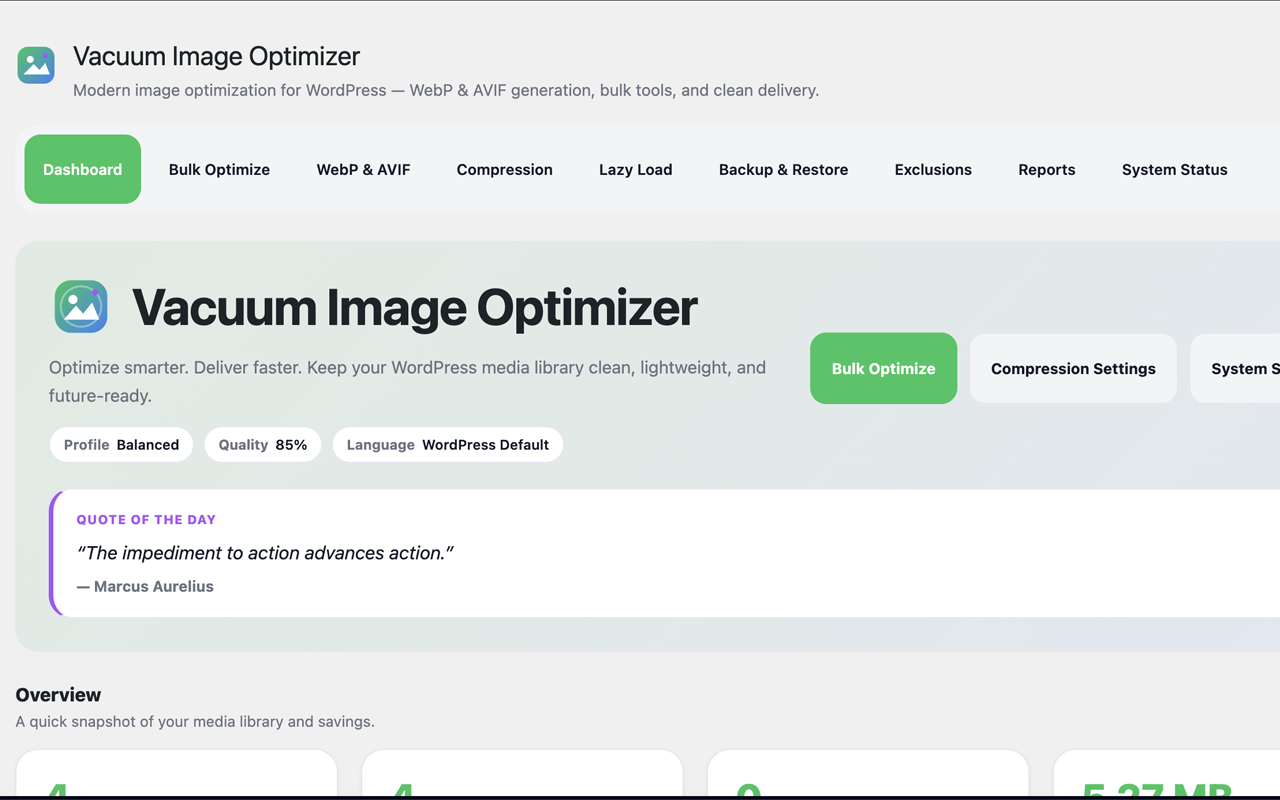
Vacuum Image Optimizer is a modern, lightweight image optimization toolkit for WordPress. It shrinks your image footprint by generating next-generation WebP and optional AVIF files locally, while always keeping your original files safe and untouched.
Everything happens inside a clean, friendly admin interface — no command line, no external services, and no account required.
Unlike optimizers that rewrite originals or depend on a remote API, Vacuum writes generated formats alongside the source image, can keep restorable backups, and serves WebP/AVIF on the frontend without changing stored media URLs.
What it does
- WebP generation — Create optimized WebP copies of your JPEG and PNG images using Imagick or GD.
- AVIF generation — Optionally generate AVIF, a newer format that is often even smaller than WebP, as a parallel format.
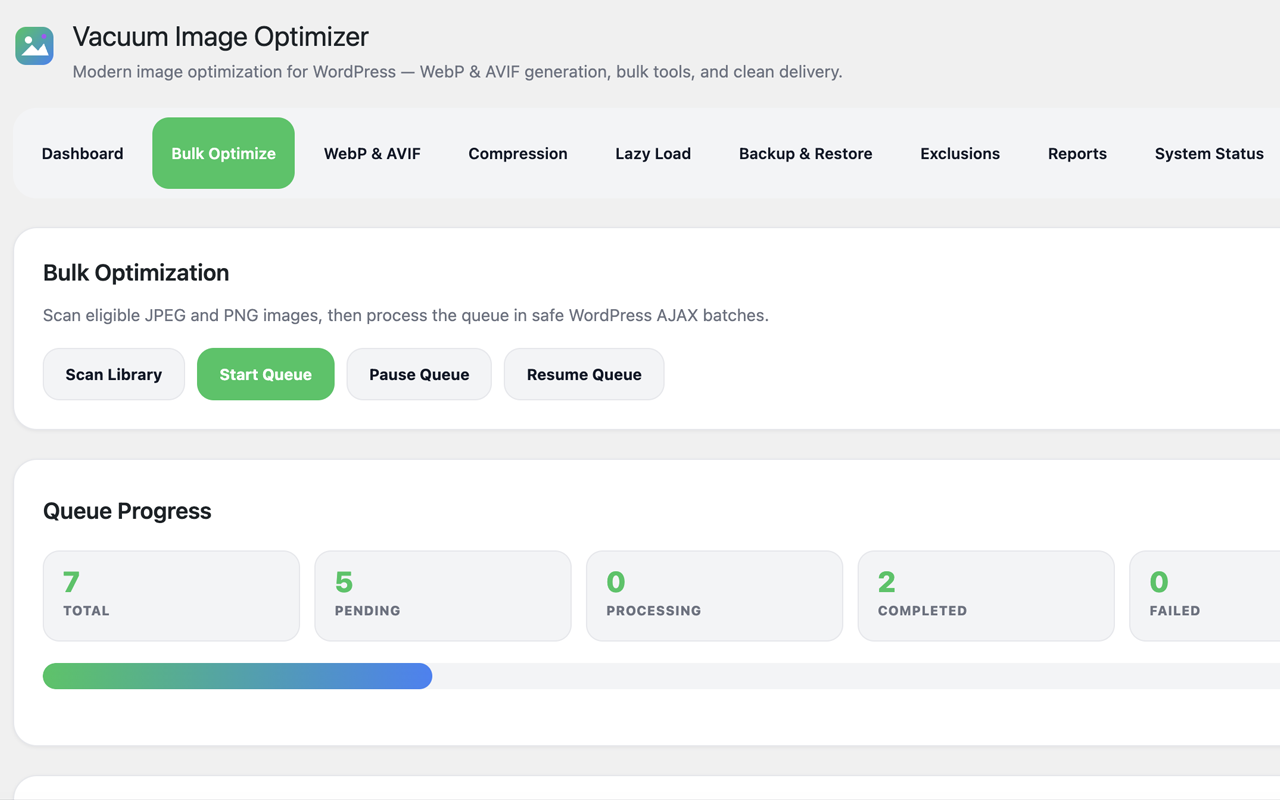
- Bulk optimization — Scan your media library and process eligible images in safe, batched background steps.
- Queue processing — A reliable queue runs work in small WordPress AJAX batches you can start, pause, and resume.
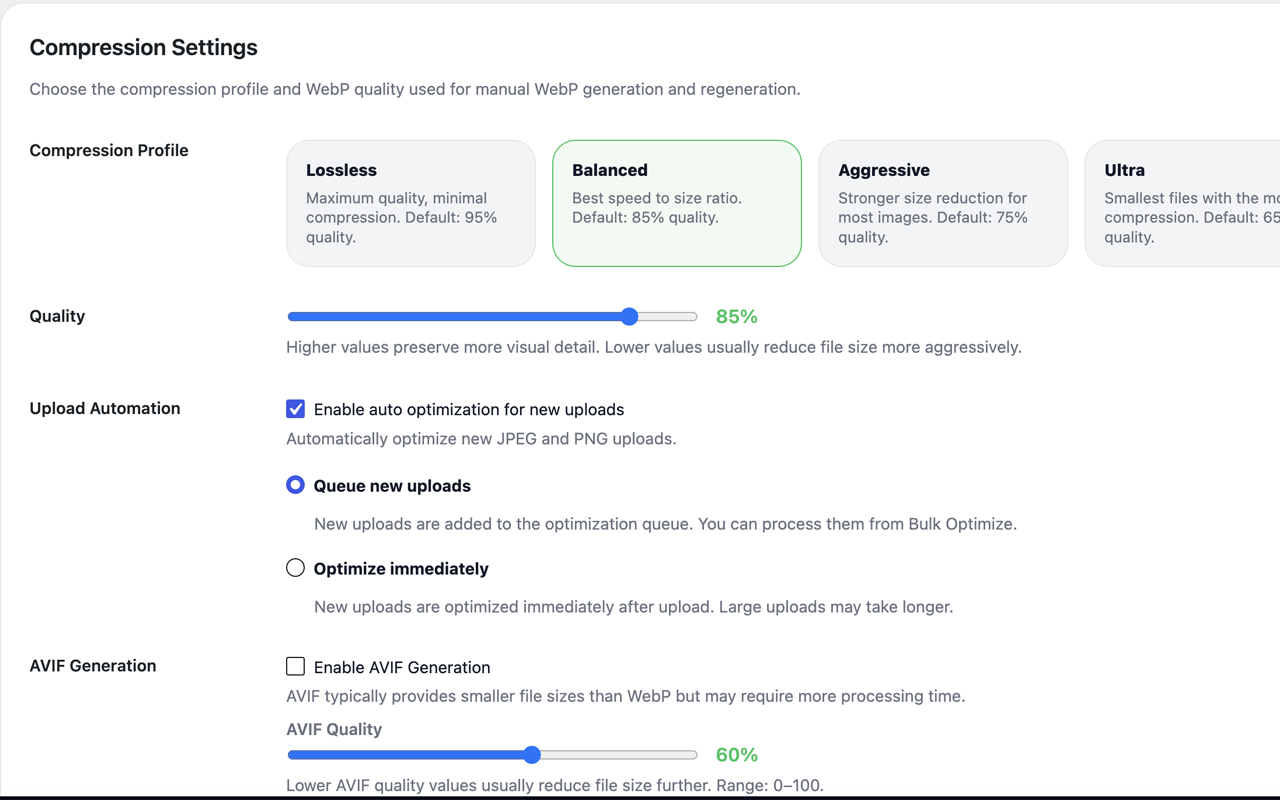
- Upload automation — Automatically optimize new JPEG and PNG uploads, either by queueing them or processing them immediately.
- Frontend delivery — Serve generated WebP/AVIF on the frontend with automatic, safe fallback to the original image — your media URLs in the database are never changed.
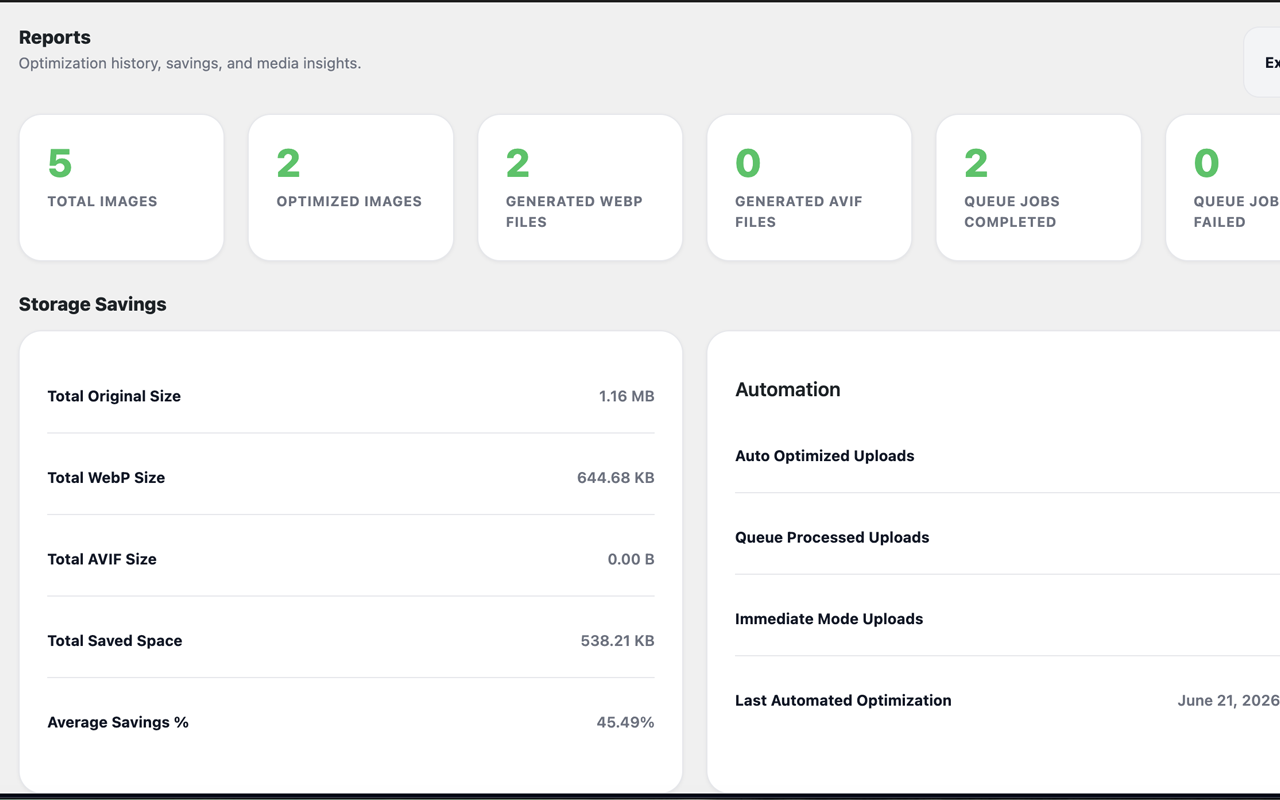
- Reports — See storage savings, recent activity, top savings, format distribution, and automation stats, with one-click CSV export.
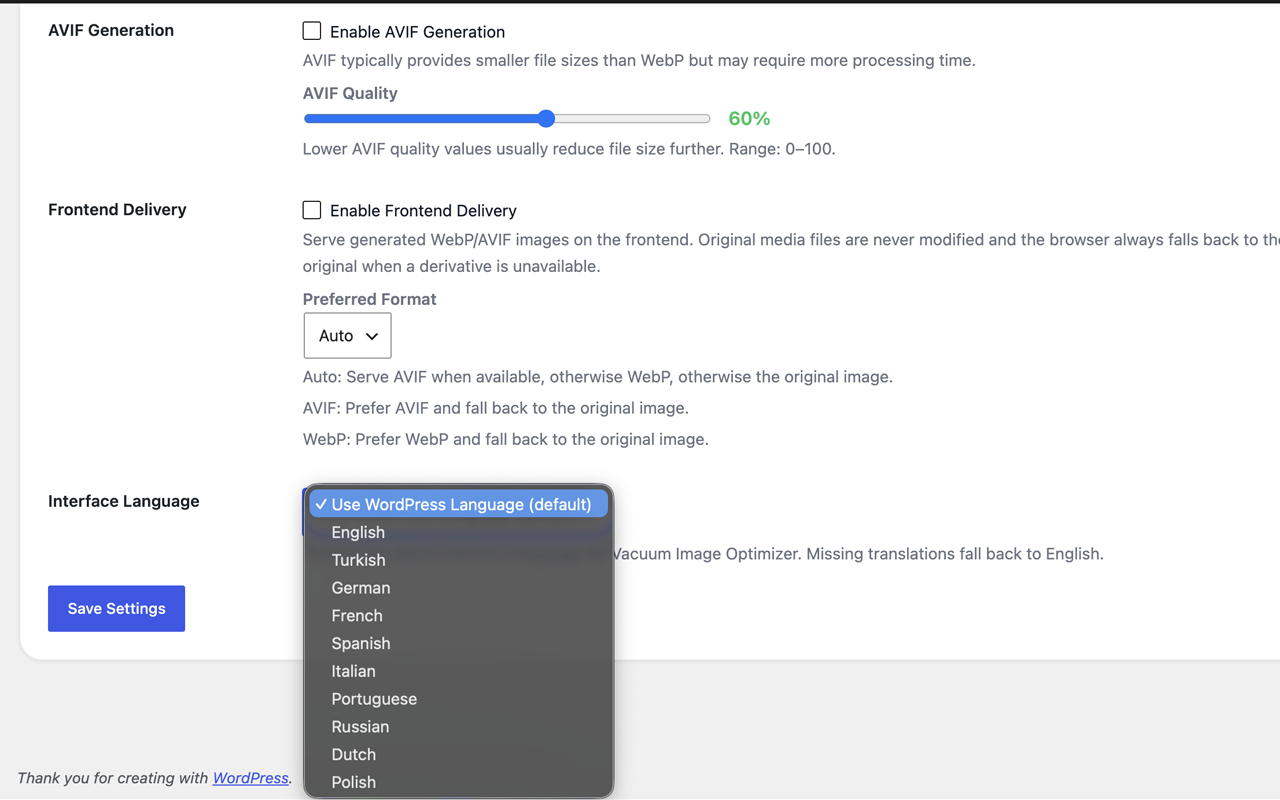
- Localization — Fully translatable, shipping with 9 bundled languages plus an in-plugin interface-language selector.
- Local processing — No external API dependency; optimization runs on your WordPress server.
Safe by design
Vacuum never modifies or deletes your original images. Optimized formats are written alongside the originals, optional backups can be kept, and a one-click restore brings originals back at any time.
Features
- WebP image generation (Imagick or GD)
- AVIF image generation as a parallel format
- Bulk optimization with a start/pause/resume queue
- Automatic optimization of new uploads (queue or immediate mode)
- Non-destructive frontend delivery with original fallback
- Native browser lazy loading (no JavaScript)
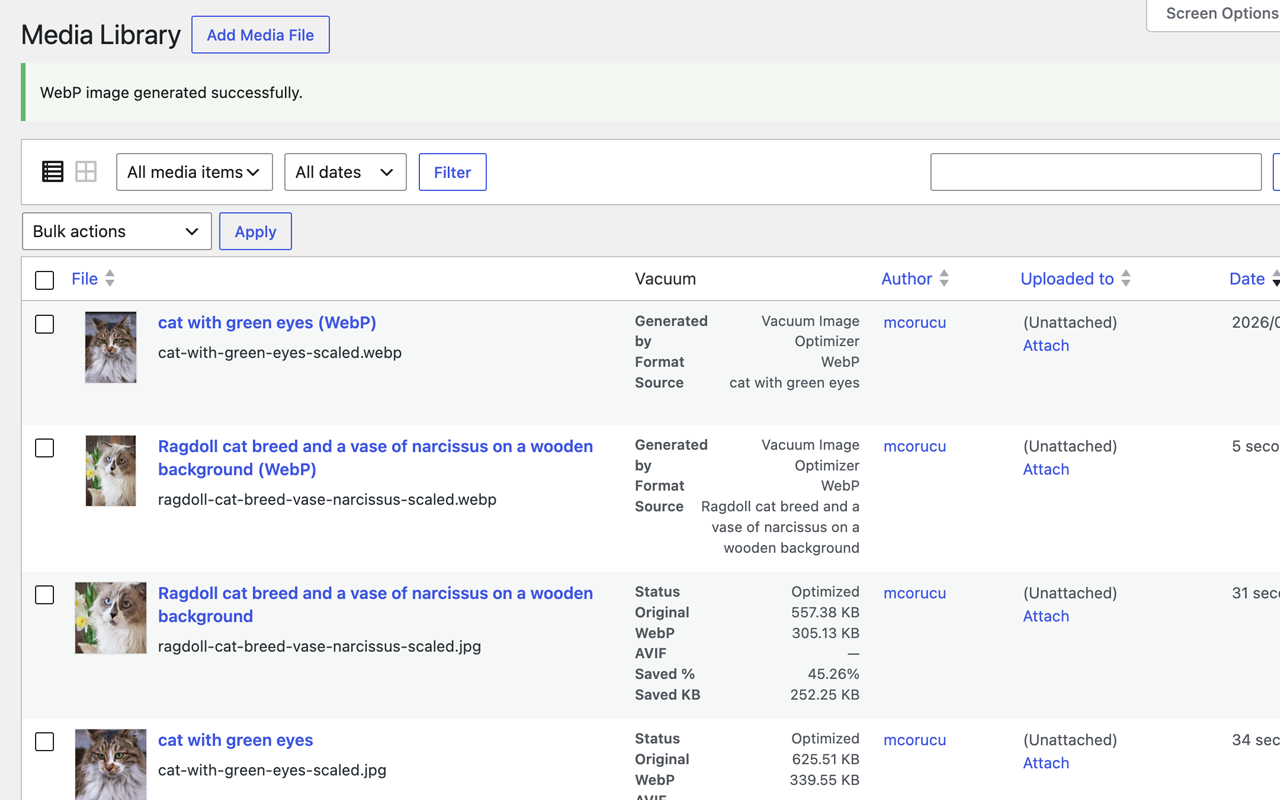
- Per-image WebP/AVIF actions in the Media Library
- Generated derivatives registered as Media Library items
- Original backups and one-click restore
- Local processing with no external API dependency
- Compression profiles and adjustable quality
- GIF and SVG eligibility exclusions
- Reports dashboard with CSV export
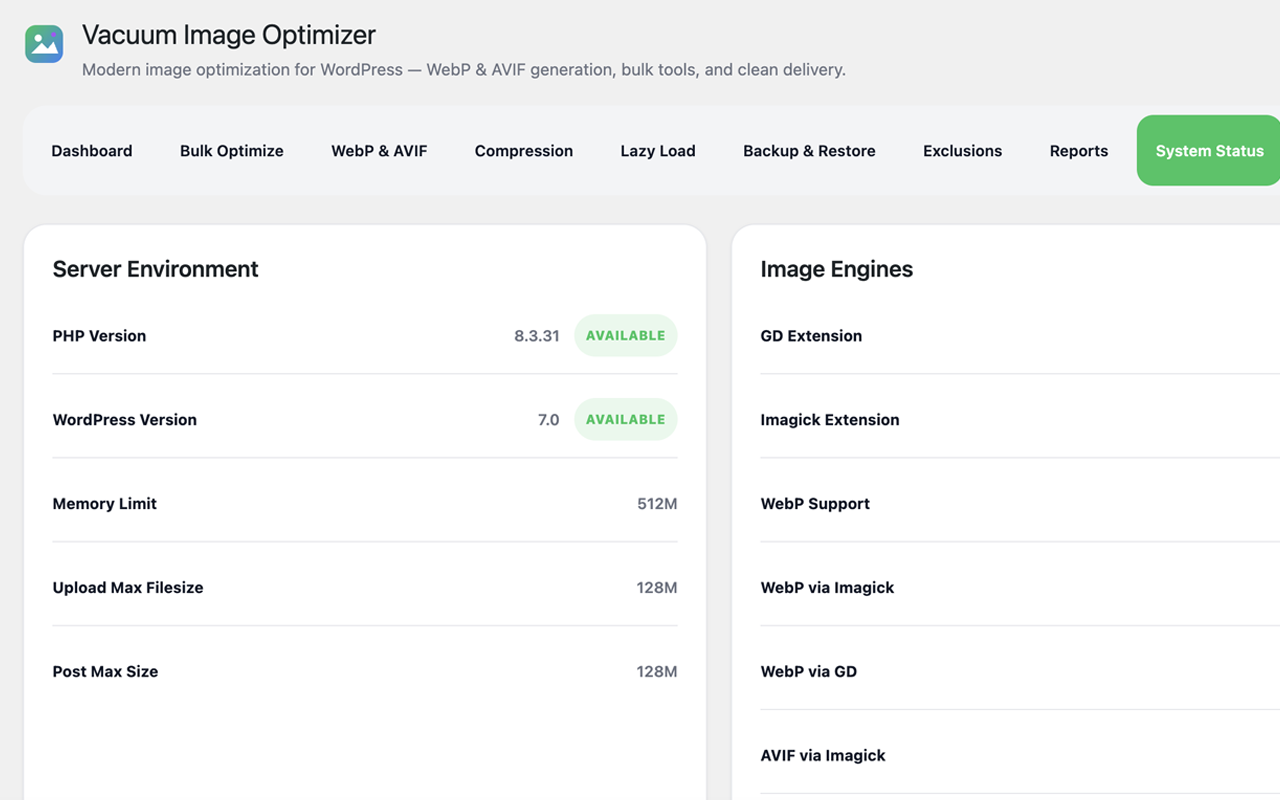
- System status and production-readiness checks
- Interface language selector with 9 bundled translations
- Clean, accessible, mobile-responsive admin UI
Sawir-shaashado
Rakibaad
- Upload the
vacuum-image-optimizerfolder to the/wp-content/plugins/directory, or install the plugin through the Plugins Add New screen in WordPress. - Activate the plugin through the Plugins screen.
- Go to Media Vacuum Image Optimizer to open the dashboard.
- Open the Compression tab to choose a compression profile and quality, and to optionally enable AVIF, upload automation, and frontend delivery.
- Open the Bulk Optimize tab, click Scan Library, then Start Queue to optimize existing images.
SBI
-
Does Vacuum replace my original images?
-
No. Your original files are never modified or deleted. Optimized WebP/AVIF copies are created alongside the originals, and the frontend always falls back to the original when needed.
-
Does it support AVIF?
-
Yes. AVIF generation is available as a parallel format when your server supports it (via Imagick or a GD build with AVIF). If AVIF is unavailable, WebP and originals continue to work normally.
-
Can I restore my originals?
-
Yes. When backups are enabled, each original is copied before optimization, and you can restore it at any time from the per-image Restore action in the Media Library.
-
Does it support bulk optimization?
-
Yes. The Bulk Optimize tab scans eligible JPEG and PNG images and processes them in safe, batched steps that you can start, pause, and resume.
-
Does it work with WooCommerce?
-
Yes. Frontend delivery hooks into the standard WordPress image functions used by WooCommerce product and gallery images, so generated formats are served automatically with fallback to originals.
-
Does it support multilingual sites?
-
The admin interface is fully translatable and ships with 9 languages. You can also pick a specific interface language in the Compression settings, independent of the site language.
-
Will it change my image URLs in the database?
-
No. Frontend delivery swaps URLs only at render time based on browser support and file availability. Your stored attachment URLs are never altered, so the feature is fully reversible.
-
What are the requirements?
-
WordPress 6.2+ and PHP 8.1+. WebP/AVIF generation requires the Imagick or GD extension with the relevant format support, which you can verify on the System Status tab.
Dibu-eegisyo
Ma jiraan wax dibu-eegis ah oo ku saabsan kaabahan.
Ka-qaybgalayaasha & Horumariyayaasha
“Vacuum Image Optimizer” waa softiweer il furan. Dadka soo socda ayaa wax ku biiriyay kaabahan.
Ka-qaybgalayaasha
Ku tarjun “Vacuum Image Optimizer” luqaddaada.
Ma xiisaynaysaa horumarinta?
Baadh koodka, fiiri bakhaarka SVN, ama iska qor diiwaanka horumarinta adigoo adeegsanaya RSS.
Isbeddellada
0.9.0
- Initial public release candidate.
- WebP generation engine (Imagick/GD).
- AVIF generation engine as a parallel format.
- Bulk optimization with a start/pause/resume queue and batched AJAX processing.
- Upload automation with queue and immediate modes.
- Non-destructive frontend delivery with original fallback and native lazy loading.
- Media Library integration: per-image actions, status column, and registered derivative attachments.
- Original backups and one-click restore.
- Compression profiles, adjustable quality, and GIF/SVG exclusions.
- Reports dashboard with storage savings, recent activity, top savings, format distribution, and CSV export.
- System status and production-readiness checks.
- Full internationalization with 9 bundled languages and an interface-language selector.